
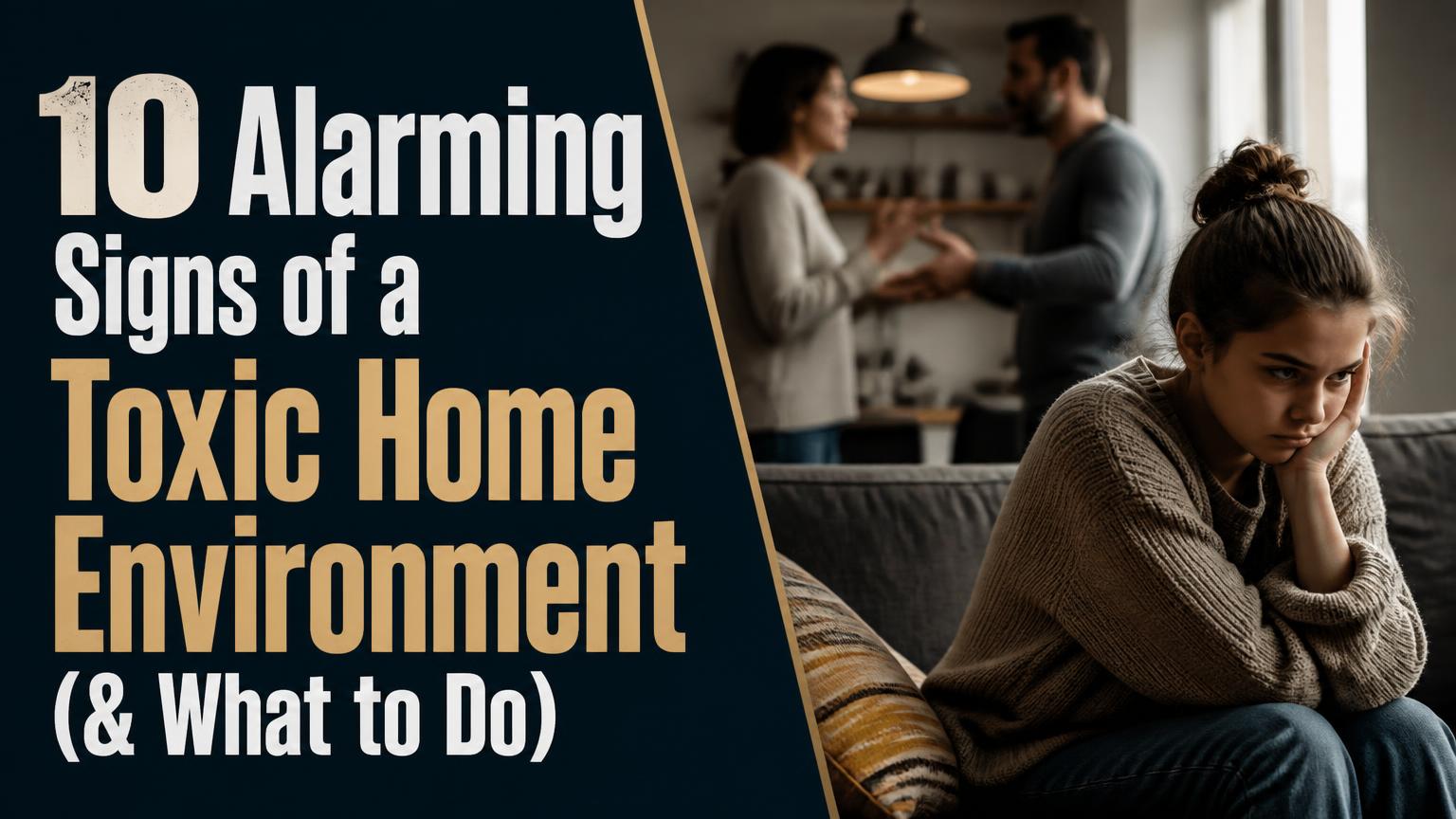
A toxic home environment is a living situation where recurring patterns of hostility, fear, disrespect, manipulation, or instability undermine a person’s emotional well-being and sense of security. Instead of providing a place to rest and feel safe, the home becomes a source of ongoing stress.
Toxic environments can develop between spouses, parents and children, siblings, relatives, or unrelated people sharing a household. They do not always involve obvious aggression. Constant criticism, unpredictable reactions, emotional neglect, and controlling behavior can also make a home unhealthy.
Recognizing the signs of a toxic home environment helps distinguish ordinary household disagreements from persistent patterns that may require meaningful changes. It also makes it easier to identify what can be addressed through communication, what requires stronger boundaries, and when personal safety must come first.
10 Alarming Signs of a Toxic Home Environment
The clearest signs of a toxic home environment involve repeated behaviors that make household members feel unsafe, disrespected, powerless, or unable to express themselves freely. A single argument or stressful period does not necessarily make a home toxic. The frequency, severity, duration, and consequences of harmful behavior matter.
The following ten signs can help identify unhealthy household dynamics and understand why they deserve attention.
1. Constant Criticism and Belittling
Frequent criticism that attacks a person’s character rather than addressing specific behavior is a common sign of an unhealthy home environment.
Constructive feedback identifies a problem and offers an opportunity for improvement. Belittling attacks someone’s intelligence, appearance, abilities, personality, or worth.
Examples include:
- Regularly calling a family member stupid, lazy, or worthless.
- Mocking someone’s achievements or personal interests.
- Comparing children or siblings to make one feel inferior.
- Turning minor mistakes into attacks on someone’s character.
- Dismissing accomplishments while emphasizing shortcomings.
Repeated belittling can gradually undermine confidence and make people reluctant to express opinions or attempt unfamiliar activities.
The distinction lies in how criticism is delivered and whether the person’s dignity is respected. Saying that someone failed to complete an agreed household responsibility is different from declaring that the person is useless.
What to do: Address specific comments when it is safe to do so. Explain which language is unacceptable and redirect discussions toward the actual issue. If insults continue, limiting participation in degrading conversations may be more productive than repeatedly defending personal worth.
2. Walking on Eggshells Around Household Members
A household becomes emotionally unpredictable when people constantly monitor their words, actions, or expressions to avoid another person’s reaction.
Someone may hesitate before asking an ordinary question, expressing disagreement, or sharing disappointing news because they cannot predict whether the response will be reasonable or explosive.
This pattern may involve:
- Checking someone’s mood before entering a room.
- Avoiding harmless subjects to prevent arguments.
- Feeling responsible for keeping another person calm.
- Hiding ordinary mistakes out of fear of disproportionate punishment.
- Changing everyday behavior to avoid anger or humiliation.
The underlying problem is not simply that someone occasionally becomes upset. It is that other household members must organize their lives around the possibility of an excessive reaction.
Over time, this uncertainty may contribute to chronic stress, heightened vigilance, and difficulty relaxing at home.
What to do: Identify the behaviors that create fear rather than assuming responsibility for preventing every outburst. Where safe, establish expectations for respectful communication. If reactions involve threats, intimidation, or violence, prioritize safety instead of attempting to manage the person’s emotions.
3. Frequent Arguments That Never Get Resolved
Disagreements are normal in households. Toxic conflict patterns emerge when arguments repeatedly escalate, become personal, or end without addressing the underlying problem.
For example, a disagreement about household chores may turn into accusations about past mistakes, personal failures, or unrelated grievances.
Unhealthy conflict may include shouting, insults, threats, deliberate provocation, or refusing to let someone disengage from an escalating argument.
A particularly damaging pattern occurs when conflicts appear to end but nothing changes. The same issue resurfaces because household members never establish workable expectations or follow through on agreements.
Persistent unresolved conflict can make ordinary interactions tense, even when nobody is actively arguing.
What to do: Discuss one issue at a time, avoid personal attacks, and agree on specific changes. Taking a temporary break can help when emotions run high, provided everyone can disengage safely. If one person consistently uses intimidation or threats, ordinary conflict-resolution techniques may be insufficient.
4. Emotional Manipulation and Guilt
Emotional manipulation occurs when someone uses guilt, fear, obligation, or emotional pressure to influence another person’s decisions in ways that undermine their autonomy.
Not every emotional appeal is manipulative. People can legitimately express disappointment or ask loved ones for support. The concern arises when emotional pressure repeatedly replaces honest discussion and respect for personal choices.
Examples include:
- Suggesting that refusing a request proves someone does not care about the family.
- Threatening to withdraw affection unless another person complies.
- Using past sacrifices to demand unquestioning obedience.
- Repeatedly portraying reasonable personal decisions as acts of betrayal.
- Denying clear past statements to make another person doubt their recollection.
These behaviors can make household members feel that maintaining peace requires surrendering their preferences or accepting unreasonable demands.
What to do: Separate the other person’s feelings from the obligation to meet their demands. Acknowledge disappointment without automatically changing a reasonable decision. Clear, consistent responses can help, although persistent manipulation may require additional support or greater independence.
5. Lack of Privacy and Respect for Boundaries
Healthy households balance shared responsibilities with respect for personal space, possessions, communications, and individual decisions.
A toxic environment may involve repeated intrusions that communicate that certain household members have no legitimate right to privacy.
Examples include entering private spaces without permission, reading personal messages, taking belongings, sharing confidential information, or demanding constant explanations for ordinary activities.
Privacy expectations naturally differ according to age, caregiving responsibilities, and legitimate safety concerns. Parents may need to supervise young children, for example. However, appropriate supervision differs from humiliation, unnecessary intrusion, or surveillance used to exert control.
The central issue is whether boundaries are reasonable, proportionate, and respected.
What to do: Communicate specific expectations, such as knocking before entering bedrooms or asking permission before borrowing belongings. Focus on concrete behaviors rather than vague demands for respect. If privacy violations form part of a broader pattern of coercive control, consider how to protect personal information safely.
6. Controlling Behavior and Unequal Power
Controlling behavior becomes particularly concerning when one household member repeatedly restricts another person’s choices, relationships, resources, or independence.
Households often have legitimate rules and responsibilities. Parents establish age-appropriate limits, and adults may make joint decisions about finances or shared property. These arrangements become unhealthy when authority is exercised through intimidation, exploitation, or unreasonable restrictions.
Warning signs include:
- Preventing someone from maintaining friendships or family relationships.
- Restricting access to money, transportation, or essential documents.
- Demanding permission for ordinary personal decisions.
- Monitoring communications or movements without legitimate justification.
- Threatening consequences for asserting reasonable independence.
Severe patterns of domination and restriction may constitute coercive control, particularly when they create fear and limit a person’s freedom.
Unlike ordinary disagreement, coercive control concerns an ongoing pattern of power over another person.
What to do: Evaluate which freedoms are being restricted and whether challenging those restrictions could create danger. Seek confidential support when necessary. For someone experiencing coercive control, quietly developing a safety plan may be safer than directly confronting the controlling person.
7. Emotional Neglect and Lack of Support
A home can be unhealthy even when there is little shouting or visible conflict. Persistent emotional unavailability, dismissal, or neglect may leave household members without the support they reasonably need.
Emotional neglect is especially significant for children, who depend on caregivers for emotional responsiveness, reassurance, and developmentally appropriate attention.
Examples include consistently ignoring a child’s distress, ridiculing expressions of sadness, withholding comfort, or treating emotional needs as burdens.
Among adults, a similar pattern may appear when household members repeatedly dismiss concerns, show little empathy, or refuse meaningful engagement.
However, emotional reserve, temporary exhaustion, or different communication styles do not automatically constitute neglect. The pattern, context, and unmet needs determine its significance.
What to do: Identify the specific support that is missing and communicate those needs where possible. For children, dependable attention and emotional responsiveness are especially important. When caregivers consistently fail to meet a child’s essential needs, intervention from another trusted adult or appropriate professional may be necessary.
8. Blame-Shifting and Refusal to Take Responsibility
Accountability allows households to repair mistakes and resolve conflict. When people consistently refuse responsibility, problems often remain unresolved.
Blame-shifting involves redirecting attention from one’s own behavior toward another person’s supposed faults.
For example, someone who shouted during an argument might insist that the other person caused the outburst by disagreeing. This avoids acknowledging the choice to shout.
Other patterns include denying obvious actions, changing the subject when confronted, making excuses without changing behavior, or demanding apologies while refusing to offer them.
The result can be a household where responsibility is distributed unfairly and certain members feel pressured to apologize simply to restore peace.
What to do: Keep discussions focused on observable actions and their consequences. Avoid prolonged debates about intentions that cannot be verified. Genuine accountability involves acknowledging behavior, addressing its effects, and making sustained changes—not merely offering an apology.
9. Favoritism, Scapegoating, and Family Division
Persistent favoritism can create resentment and insecurity, especially when family members receive markedly different treatment without reasonable justification.
Scapegoating occurs when one person is repeatedly blamed for broader family problems or treated as the primary source of household difficulties.
A child, for example, might be blamed for family tension even when adults are responsible for managing the underlying conflict.
Other divisive patterns include encouraging siblings to compete for affection, recruiting relatives into disputes, or pressuring household members to take sides.
These dynamics can damage trust because relationships become organized around alliances, competition, and unequal expectations rather than mutual respect.
Not every difference in treatment is favoritism. Children of different ages have different needs, and household responsibilities may reasonably vary.
What to do: Evaluate whether expectations and consequences are fair, taking individual circumstances into account. Avoid participating in efforts to isolate or blame one person for collective problems. Where possible, address concerns directly rather than through alliances or intermediaries.
10. Threats, Intimidation, or Physical Violence
Threats and physical aggression are among the most serious warning signs of an unsafe home environment.
These behaviors may include hitting, pushing, restraining, threatening injury, blocking exits, destroying possessions to frighten someone, or using physical size and proximity to intimidate.
Threats can also involve pets, children, financial security, or access to essential resources.
Physical injury does not have to occur for intimidation to be serious. A person who threatens violence or deliberately creates fear may already be engaging in abusive behavior.
Unlike less severe household tensions, these actions require attention to immediate safety rather than simply improving communication.
What to do: If danger is immediate, move to a safer location when possible and contact emergency services. If leaving immediately is not feasible, confidential domestic violence services or other qualified support organizations can help assess options and develop a safety plan.
Avoid assuming that confronting the threatening person or announcing plans to leave will be safe.
How a Toxic Home Environment Affects Mental and Emotional Well-Being
The consequences of an unhealthy home depend on the behaviors involved, how long they continue, individual circumstances, and access to support.
A home is generally expected to offer some predictability and security. When it repeatedly becomes a source of threat or humiliation, people may have difficulty recovering from everyday stress.
Possible effects include persistent anxiety, irritability, sleep difficulties, reduced confidence, trouble concentrating, and withdrawal from social activities.
Some people become highly attentive to other people’s moods because anticipating conflict has become part of daily life. Others avoid expressing needs or opinions because doing so has repeatedly led to criticism or punishment.
Children may be particularly vulnerable because they are still developing emotional regulation, expectations about relationships, and a sense of personal security.
However, these effects are not inevitable, and they are not unique to toxic households. Similar symptoms can arise for many reasons. Identifying the household pattern is more informative than attempting to determine the cause from symptoms alone.
How to Tell the Difference Between a Toxic Home and Normal Family Conflict
The distinction between ordinary household difficulties and toxic patterns is not whether disagreements occur. It is how people behave during disagreements, whether problems can be repaired, and whether everyone retains basic dignity and safety.
| Normal Household Conflict | Toxic Household Pattern |
|---|---|
| Disagreements concern identifiable issues. | Disagreements repeatedly become personal attacks. |
| People can express different opinions. | Disagreement triggers intimidation or punishment. |
| Mistakes can be acknowledged and repaired. | Responsibility is consistently denied or shifted. |
| Personal boundaries are generally respected. | Boundaries are repeatedly violated. |
| Conflict may cause temporary tension. | Fear or hostility becomes a regular feature of home life. |
| Household rules have reasonable purposes. | Rules are used arbitrarily to control or humiliate. |
A home does not need to display all ten warning signs to be harmful. One severe behavior, such as physical violence, can make an environment unsafe.
Conversely, an isolated argument or insensitive remark does not automatically establish a toxic household pattern.
The most useful questions concern severity, repetition, power differences, accountability, and whether household members can reasonably expect respectful treatment.
What to Do When Living in a Toxic Home Environment
The appropriate response depends on the relationship, the seriousness of the behavior, available resources, and whether attempts to address problems are safe.
Identify the Specific Behaviors Causing Harm
Start by distinguishing observable events from general impressions.
Instead of describing the entire household as toxic, identify what happens: repeated insults, threats, privacy violations, financial restrictions, or unresolved arguments.
Recording incidents privately, where safe, may help reveal patterns and clarify which changes are needed. Avoid keeping records in a location accessible to someone who monitors or controls personal information.
Communicate Expectations Where It Is Safe
When household members are willing to listen and there is no significant risk of retaliation, direct communication may improve unhealthy interactions.
For example, explaining that disagreements must remain free of insults establishes a clearer expectation than simply asking someone to behave better.
Focus on specific actions and realistic changes. Communication works best when everyone accepts some responsibility for improving the household.
Establish Boundaries That Can Be Maintained
A boundary describes what a person will do to protect their own time, privacy, or well-being. It does not guarantee control over another person’s actions.
For example, someone might decide to end a conversation when shouting begins or decline to discuss private matters with a relative who repeatedly shares confidential information.
Boundaries should reflect what is realistically possible. Children, financially dependent adults, and people experiencing coercive control may have limited freedom to enforce them without consequences.
Build Support Outside the Household
Trusted friends, relatives, teachers, counselors, or community support services may offer perspective and practical assistance.
Outside support can be especially valuable when a person has become isolated or has difficulty judging whether household behavior is reasonable.
For minors experiencing serious neglect, threats, or violence, involving a safe adult or appropriate child protection service may be necessary.
Develop a Safety Plan When Abuse Is Present
When a household involves violence, threats, or coercive control, safety planning takes priority over repairing communication.
Depending on the circumstances, a plan may involve identifying a safe place to go, keeping essential documents accessible, arranging transportation, or contacting confidential support services.
Digital privacy matters when someone monitors devices or communications. Seeking assistance through a safer device or trusted person may reduce exposure.
Leaving an abusive household can sometimes increase danger, particularly when the abusive person fears losing control. Individualized guidance from a qualified domestic violence service can help determine safer options.
Can a Toxic Home Environment Become Healthy Again?
Some unhealthy households can improve, particularly when the problems involve poor communication, unmanaged stress, or learned conflict habits that everyone is willing to change.
Meaningful improvement requires more than temporary apologies. Household members must recognize harmful behavior, accept appropriate responsibility, respect boundaries, and demonstrate consistent changes over time.
Family counseling or relationship counseling may help when participants can engage safely and voluntarily. However, joint counseling is not automatically appropriate where abuse, intimidation, or coercive control is present, because unequal power and fear may prevent honest participation.
A healthier environment cannot be created by one person continually accommodating everyone else’s harmful behavior.
Sometimes improvement means changing the way people interact within the household. In other situations, greater distance, independent living arrangements, or protective intervention may be necessary.
The appropriate outcome depends on what is realistically safe and achievable.
Conclusion
The most revealing signs of a toxic home environment are recurring patterns of criticism, fear, manipulation, control, neglect, unresolved conflict, and disrespect. Threats and violence are especially serious and may require immediate protective action.
Recognizing these patterns does not mean labeling every disagreement as toxic. It means evaluating whether the household consistently provides reasonable safety, dignity, privacy, and emotional support.
Some harmful dynamics can improve through accountability and sustained behavioral change. Others require outside assistance or safer living arrangements. The priority is not preserving the appearance of a peaceful home, but creating conditions in which people can live without persistent fear, humiliation, or coercion.