
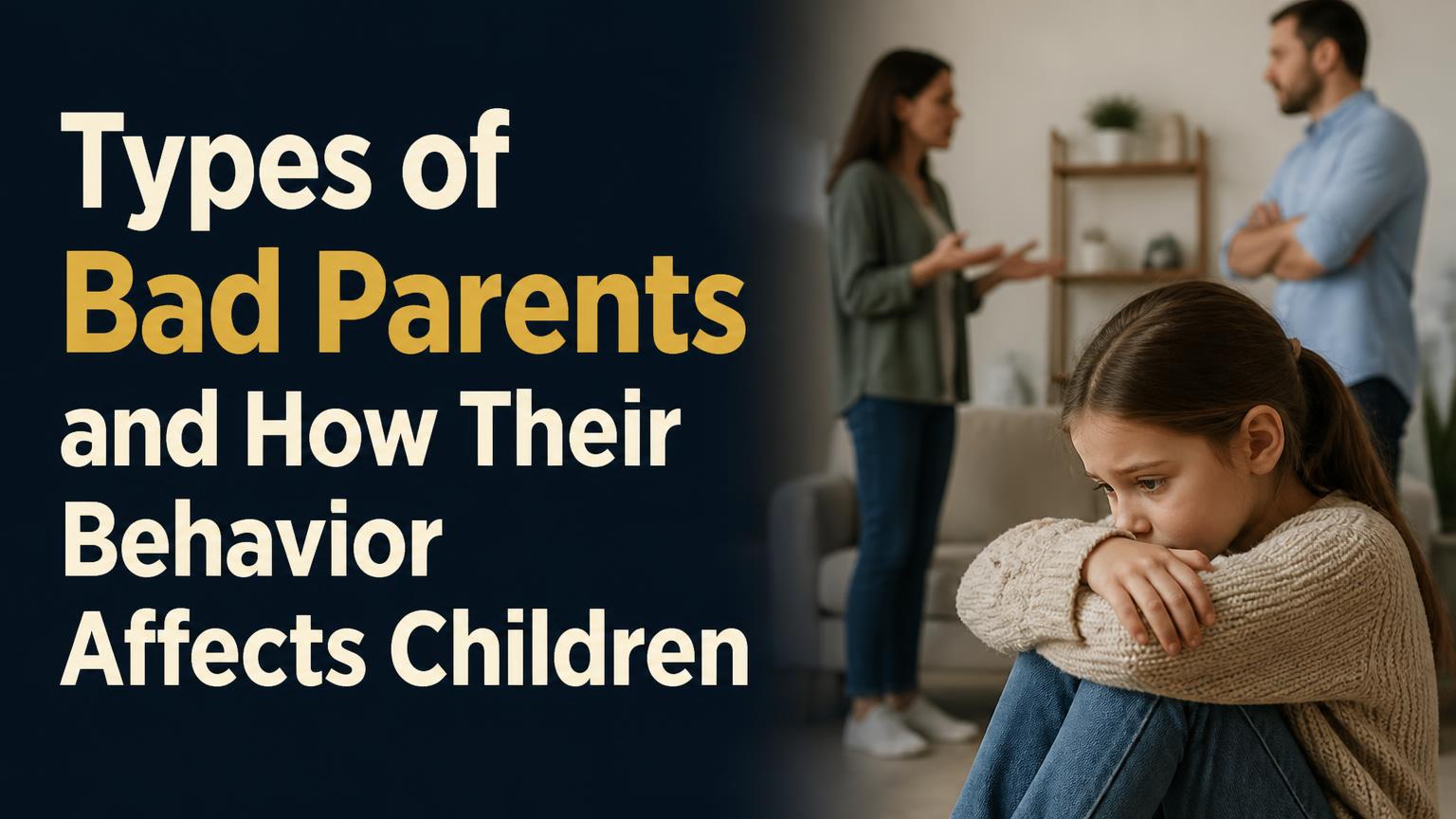
Parents influence how children understand themselves, develop relationships, manage emotions, and respond to challenges. While no parent gets everything right, certain patterns of parenting can undermine a child’s emotional security, confidence, and development. Understanding the different types of bad parents helps distinguish ordinary parenting mistakes from persistent behaviors that may cause lasting harm.
Bad parenting is not defined by occasional frustration, imperfect decisions, or disagreements with children. It generally involves repeated patterns of neglect, excessive control, hostility, inconsistency, or other behavior that fails to meet a child’s developmental needs. Some patterns are openly harmful, while others appear caring or protective but restrict a child’s independence and emotional growth.
Recognizing these patterns matters because their effects can extend beyond childhood, influencing self-esteem, emotional regulation, personal boundaries, and adult relationships. However, children respond differently to similar experiences, and difficult parenting does not determine a child’s future.
Types of Bad Parents
There are several recognizable types of bad parents, each characterized by different behaviors and approaches to raising children. These categories describe patterns rather than fixed identities. A parent may exhibit characteristics of several types, and the severity, frequency, and context of their behavior determine how harmful it may be.
1. The Neglectful Parent
Neglectful parents consistently fail to meet important physical, emotional, educational, or supervisory needs. They may provide insufficient attention, guidance, affection, or protection, leaving children without the dependable support required for healthy development.
Neglect can take several forms. Physical neglect involves inadequate provision of necessities such as food, appropriate clothing, shelter, or medical care. Emotional neglect occurs when a child’s emotional needs are repeatedly ignored or dismissed.
For example, a parent might provide a comfortable home and adequate financial support but rarely acknowledge their child’s feelings, achievements, or distress. Although material needs are met, the child may experience emotional isolation.
Children experiencing chronic neglect may struggle with trust, emotional expression, self-worth, or relationships. The effects depend on factors including the child’s age, the duration of neglect, and the presence of other supportive adults.
Neglect should also be distinguished from poverty or circumstances beyond a parent’s control. Limited resources alone do not establish neglect.
2. The Authoritarian Parent
Authoritarian parents emphasize obedience, strict rules, and parental authority while allowing limited discussion or emotional responsiveness.
Their parenting often follows the principle that children should obey because the parent holds authority, rather than because they understand the reasoning behind a rule.
Common behaviors include imposing rigid expectations, discouraging disagreement, using disproportionate punishment, and treating questions as disrespect.
For example, a teenager who respectfully questions a household rule may receive punishment simply for expressing a different opinion.
Structure and discipline are not inherently harmful. Children benefit from clear expectations and consistent limits. Problems arise when strictness is combined with intimidation, humiliation, excessive punishment, or disregard for a child’s developmental needs.
Children raised under persistently harsh authoritarian parenting may become fearful of mistakes, overly dependent on approval, or reluctant to express their opinions. Others may respond through secrecy, resistance, or conflict.
3. The Permissive Parent
Permissive parents provide considerable freedom and affection but establish few consistent limits or expectations.
They may avoid enforcing rules because they dislike conflict, fear upsetting their children, or believe that restrictions interfere with happiness.
For instance, a parent might repeatedly allow a young child to disregard bedtime, behave aggressively toward siblings, or avoid reasonable responsibilities without offering consistent guidance.
Permissiveness differs from respecting children’s autonomy. Healthy autonomy involves giving children age-appropriate choices within dependable boundaries.
When children receive little structure, they may have difficulty tolerating frustration, managing impulses, accepting limits, or meeting expectations outside the home.
However, permissive parenting does not automatically produce behavioral problems. Outcomes depend on the child’s temperament, other caregiving relationships, and the broader environment.
4. The Overprotective Parent
Overprotective parents attempt to shield children from ordinary risks, disappointment, discomfort, and age-appropriate challenges.
Their behavior may originate in genuine concern for safety. Nevertheless, excessive protection can interfere with opportunities to develop independence and confidence.
Examples include preventing children from participating in suitable social activities, repeatedly intervening in minor disagreements, or making decisions that children are developmentally capable of making themselves.
A parent who immediately contacts a teacher whenever a child encounters a manageable academic difficulty may unintentionally prevent the child from practicing problem-solving skills.
Protection becomes problematic when it consistently exceeds the child’s actual needs and abilities.
Children who rarely experience manageable challenges may develop less confidence in their judgment or become unusually dependent on reassurance. Appropriate parental protection, however, must always reflect the child’s age, abilities, and genuine safety risks.
5. The Emotionally Unavailable Parent
Emotionally unavailable parents struggle to provide consistent emotional attention, warmth, or responsiveness.
They may fulfill practical responsibilities while remaining distant during moments when children need comfort, encouragement, or understanding.
A child who expresses sadness might hear, “There’s nothing to cry about,” instead of receiving acknowledgment and support.
Emotional unavailability can result from various circumstances, including chronic stress, emotional difficulties, limited parenting skills, or learned patterns of emotional expression. Its presence does not establish a particular diagnosis or intention.
When emotional needs are repeatedly dismissed, children may learn to conceal distress, question the legitimacy of their feelings, or avoid seeking support.
Importantly, parents do not need to respond perfectly to every emotion. What matters is a sufficiently reliable pattern of responsiveness, including the willingness to reconnect after misunderstandings.
6. The Controlling Parent
Controlling parents attempt to direct excessive aspects of their children’s thoughts, choices, relationships, or identities.
Unlike reasonable parental supervision, unhealthy control extends beyond what is necessary for safety and age-appropriate guidance.
A controlling parent might dictate an older teenager’s friendships, dismiss their career interests, or make affection conditional on following parental preferences.
Some controlling behaviors involve psychological control, such as guilt, withdrawal of affection, or pressure to suppress personal opinions.
For example, a parent might respond to a young adult’s independent decision by saying, “After everything I’ve sacrificed, this is how you repay me.”
Repeated exposure to this pattern may make it harder for children to develop confidence in their decisions, express disagreement, or maintain personal boundaries.
Parental authority should generally evolve as children mature. Expectations appropriate for a seven-year-old may be unnecessarily restrictive for a seventeen-year-old.
7. The Highly Critical Parent
Highly critical parents repeatedly emphasize shortcomings, mistakes, or perceived inadequacies while offering limited encouragement or recognition.
Their criticism may concern academic performance, appearance, behavior, personality, or personal achievements.
For example, a child who receives an excellent examination result may hear only criticism about the few questions answered incorrectly.
Constructive feedback identifies specific behavior and helps children improve. Harmful criticism frequently attacks personal worth or communicates that achievement is never sufficient.
Statements such as “That assignment needs more work” differ substantially from “You’re useless at everything.”
Children exposed to persistent personal criticism may develop low self-esteem, perfectionistic tendencies, fear of failure, or a harsh internal dialogue.
The distinction lies partly in whether feedback helps children learn or makes them feel fundamentally inadequate.
8. The Inconsistent Parent
Inconsistent parents apply rules, consequences, affection, or expectations unpredictably.
A behavior tolerated one day may provoke intense anger the next. Promises may be repeatedly broken, and household expectations may change without explanation.
For example, a parent might encourage a child to express opinions during one conversation but punish the same behavior during another.
This unpredictability can make it difficult for children to understand expectations or anticipate parental responses.
Children may become unusually attentive to changes in a parent’s mood, experience anxiety about making mistakes, or struggle to develop stable behavioral expectations.
Not every change in rules represents harmful inconsistency. Parents sometimes need to adjust expectations as circumstances change. Explaining those changes helps children understand that flexibility is different from unpredictability.
9. The Manipulative Parent
Manipulative parents use guilt, emotional pressure, deception, or conditional approval to influence their children’s behavior.
Rather than communicating needs directly, they may create a sense of obligation or responsibility for the parent’s emotional state.
For instance, a parent might tell a child, “If you really loved me, you wouldn’t spend time with your friends.”
Such statements pressure children to demonstrate affection through compliance.
Another pattern involves making children feel responsible for resolving adult conflicts or maintaining family harmony.
Repeated manipulation can interfere with children’s ability to recognize their own needs, disagree without excessive guilt, or distinguish genuine responsibility from imposed obligation.
An isolated guilt-inducing comment does not necessarily establish a persistent manipulative pattern. The concern increases when emotional pressure becomes a regular method of obtaining compliance.
10. The Favoritism-Practicing Parent
Parents who practice persistent favoritism give one child noticeably more approval, attention, privileges, or protection than another without a reasonable explanation based on individual needs.
Favoritism may involve comparing siblings, excusing one child’s misconduct while punishing another, or consistently celebrating one child’s achievements more enthusiastically.
For example, one sibling might receive encouragement for average academic results while another is criticized despite performing well.
Children who perceive themselves as less favored may experience resentment, insecurity, or reduced self-worth. Favored children may also experience pressure to maintain their position or difficulties in sibling relationships.
Fair parenting does not mean treating every child identically. Children have different ages, abilities, and needs. The concern is persistent unequal treatment that communicates differences in personal value rather than legitimate differences in support.
11. The Parent Who Uses Humiliation or Intimidation
Some parents rely on fear, threats, ridicule, or humiliation to control children’s behavior.
They may shout aggressively, mock vulnerabilities, threaten abandonment, or embarrass children publicly as punishment.
A parent who repeatedly insults a child for making mistakes may secure immediate compliance while damaging the child’s sense of emotional safety.
Unlike ordinary discipline, intimidation attempts to control behavior through fear. Humiliation attacks the child’s dignity rather than addressing the specific action.
Persistent threats, degradation, and frightening behavior can constitute emotional abuse, particularly when they form a sustained pattern.
Children may become anxious, withdrawn, aggressive, or fearful of authority. Some may comply outwardly while becoming increasingly reluctant to communicate honestly.
Physical violence and threats of serious harm require particular attention because they raise immediate safety concerns, regardless of whether the parent describes them as discipline.
12. The Parent Who Reverses Family Roles
Role-reversing parents place responsibilities on children that properly belong to adults.
This pattern is often called parentification when children are expected to perform developmentally inappropriate caregiving or emotional roles.
A child might become responsible for regularly comforting a distressed parent, mediating adult disagreements, or managing significant household responsibilities without adequate adult support.
For example, a parent might repeatedly discuss intimate marital problems with a young child and expect the child to provide emotional reassurance.
Helping with household tasks or showing compassion toward family members is normal and can support development. Parentification differs because the burden is excessive, persistent, or inappropriate for the child’s age.
Children placed in these roles may develop a heightened sense of responsibility while neglecting their own needs. They may also struggle to recognize when other people’s demands exceed reasonable expectations.
How Bad Parenting Affects Children’s Development
The effects of harmful parenting depend on the nature and severity of the behavior, how long it continues, the child’s developmental stage, and the availability of protective relationships.
Not every child exposed to harmful parenting experiences the same outcome, and difficulties in adulthood cannot automatically be attributed to parenting.
Emotional Development and Self-Esteem
Children develop part of their self-image through repeated interactions with caregivers.
When parents provide warmth, encouragement, and appropriate feedback, children have opportunities to develop a sense of competence and personal worth.
Persistent criticism, rejection, or emotional neglect can undermine that process. Some children may internalize negative messages and begin interpreting ordinary mistakes as evidence of personal inadequacy.
Trust and Relationships
Early caregiving experiences can influence expectations about relationships.
Children who experience consistent emotional support may find it easier to trust others and seek help. Those exposed to unpredictable, rejecting, or frightening behavior may develop greater caution around closeness, disagreement, or dependence.
These tendencies are not permanent. Supportive friendships, other caregivers, healthy adult relationships, and new experiences can contribute to change.
Emotional Regulation and Behavior
Children learn emotional regulation partly through observation and through adults helping them manage difficult feelings.
A parent who responds calmly to frustration demonstrates ways of handling distress. A parent who repeatedly responds with threats, uncontrolled anger, or emotional dismissal may provide fewer opportunities for that learning.
Some children respond through aggression or defiance, while others become withdrawn or excessively compliant.
These reactions should not be interpreted as proof of a particular parenting style because many biological, social, and environmental factors influence behavior.
Independence and Decision-Making
Excessive control and overprotection can restrict opportunities to practice judgment, solve problems, and recover from mistakes.
Conversely, insufficient supervision may require children to make decisions without the guidance they need.
Healthy development involves gradually increasing responsibility while maintaining appropriate support. Both excessive restriction and insufficient guidance can interfere with that balance.
The Difference Between Bad Parenting and Normal Parenting Mistakes
All parents sometimes become impatient, make unfair decisions, misunderstand their children, or respond poorly under stress.
The distinction between imperfect parenting and a harmful pattern depends on several factors:
- Frequency: Is the behavior occasional or repeated?
- Severity: Does it involve ordinary frustration, or does it include threats, humiliation, violence, or serious neglect?
- Responsibility: Does the parent acknowledge mistakes and attempt to repair the relationship?
- Responsiveness: Can the parent adjust expectations when the child’s needs become clear?
- Impact: Is the child experiencing persistent fear, insecurity, deprivation, or other significant difficulties?
A parent who raises their voice once, apologizes, and changes their approach differs from one who repeatedly intimidates a child and refuses responsibility.
Repair matters. Acknowledging a mistake, listening to the child’s experience, and changing behavior can help restore trust.
However, apologies alone do not undo persistent harmful behavior. Meaningful repair requires sustained changes, particularly when the conduct is severe.
Can Bad Parents Love Their Children?
Parents can genuinely love their children while behaving in ways that cause harm.
Affection and harmful parenting are not mutually exclusive. A parent may care deeply about a child’s future while using excessive control, harsh criticism, or inappropriate emotional pressure.
For example, a parent might restrict nearly every independent activity because of intense concern about safety. The intention may be protective, but the resulting restrictions can interfere with normal development.
This distinction matters because evaluating parenting requires attention to behavior and consequences, not only stated intentions.
Love does not automatically make harmful behavior acceptable. Equally, harmful parenting does not necessarily mean a parent lacks affection.
What children need is not simply to be loved, but to experience care through reliable, respectful, developmentally appropriate behavior.
Can Harmful Parenting Patterns Change?
Parenting patterns can change when parents recognize problematic behavior, accept responsibility, and consistently adopt healthier approaches.
Change often begins by identifying specific actions rather than adopting a broad identity such as being a bad parent.
A highly critical parent, for example, might practice separating feedback about behavior from judgments about personal worth. An overprotective parent might gradually allow age-appropriate decisions while remaining available for support.
Effective changes may include listening without immediately dismissing emotions, setting clear and proportionate expectations, following through on reasonable commitments, and apologizing when necessary.
For entrenched patterns, parenting education, family support services, or professional assistance may be useful. Serious neglect, violence, or abuse may require protective intervention rather than ordinary communication improvements.
The possibility of change should not be confused with a guarantee that a parent will change. Lasting improvement depends on behavior over time.
What Children and Adult Children Can Do About Harmful Parenting
The appropriate response depends substantially on age, dependence, safety, and the seriousness of the parent’s behavior.
Children who are still dependent on their parents generally have limited power to change household conditions. When a child experiences frightening, abusive, or neglectful behavior, seeking help from a trustworthy adult, school counselor, child protection service, or appropriate local authority may be necessary.
Adult children may have more options for deciding how much contact to maintain and which behaviors they will accept.
For example, an adult child dealing with repeated personal criticism might explain that they will end conversations when insults begin. Following through consistently can protect their participation in the relationship, although it cannot force the parent to become respectful.
In situations involving intimidation, coercive control, or violence, directly confronting the parent may increase danger. Safety planning and confidential support may be more appropriate.
It is also possible to recognize harmful parenting without reducing a parent to a single label. Understanding the behavior, assessing its impact, and deciding how to respond are separate tasks.
Conclusion
The different types of bad parents include neglectful, authoritarian, permissive, overprotective, controlling, highly critical, emotionally unavailable, inconsistent, manipulative, intimidating, favoritism-practicing, and role-reversing parents.
These patterns differ in how they affect children, but they share a potential to interfere with emotional security, healthy development, independence, or relationships when they become persistent or severe.
The most useful distinction is not between perfect and imperfect parents. It is between ordinary mistakes that can be acknowledged and repaired, and harmful patterns that repeatedly compromise a child’s needs, dignity, or safety.