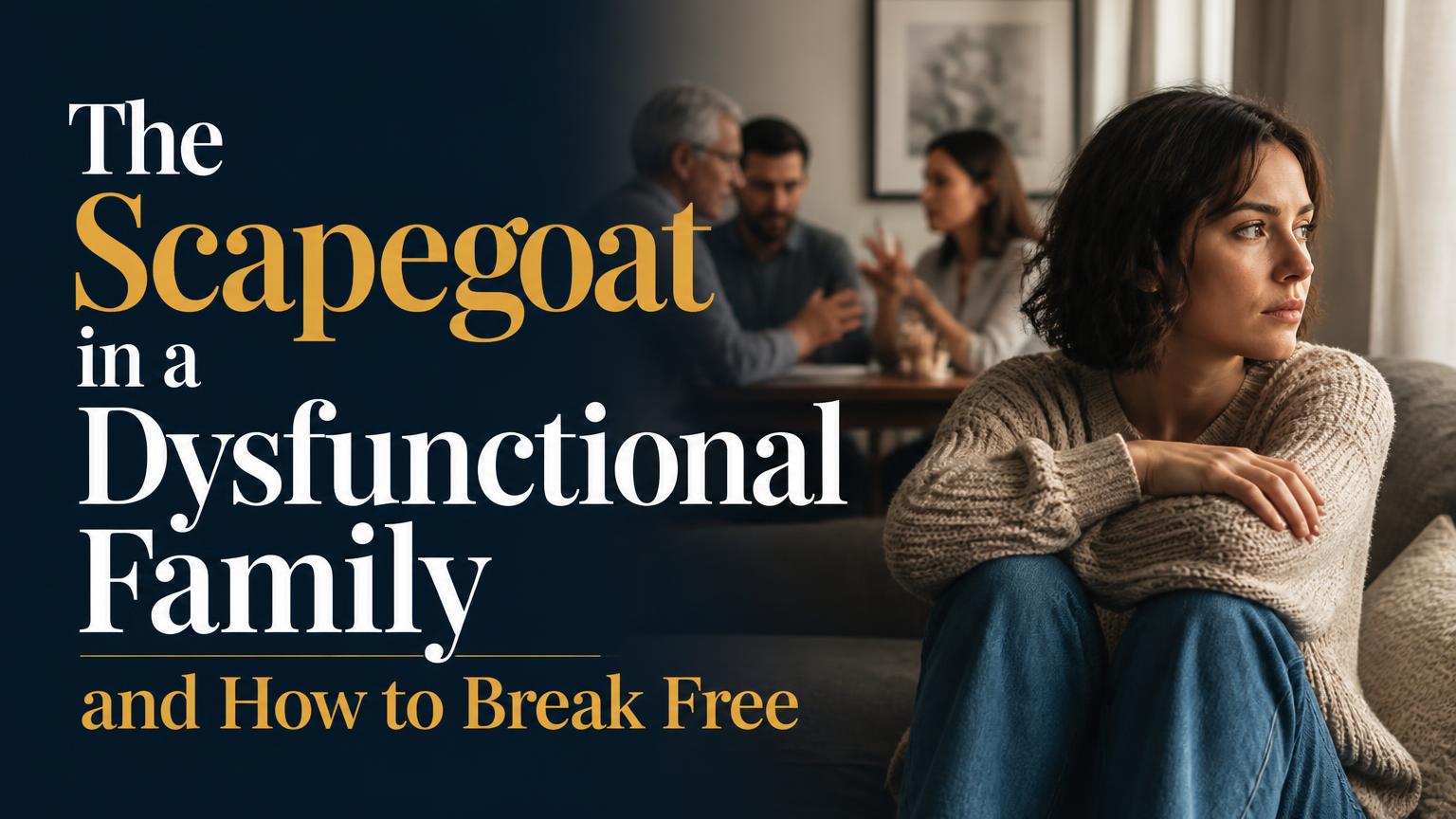
In a dysfunctional family, the scapegoat is the family member who is repeatedly blamed for problems, conflicts, or tensions that involve the wider family. Rather than addressing unhealthy patterns or shared responsibilities, other family members may treat one person as the source of everything that goes wrong.
Being the scapegoat in a dysfunctional family can affect self-esteem, personal identity, relationships, and the ability to trust one’s own judgment. The person may grow up believing they are difficult, selfish, or responsible for keeping everyone else happy, even when those accusations are unfair.
Breaking free begins with recognizing the pattern, separating genuine personal responsibility from misplaced blame, and developing relationships and boundaries that no longer depend on accepting an unfair family role.
The Scapegoat in a Dysfunctional Family
Family scapegoating is a recurring pattern in which one family member becomes the primary target of criticism, blame, rejection, or negative assumptions. The scapegoat may be held responsible for family disagreements, accused of causing emotional distress, or portrayed as the person who prevents the family from functioning peacefully.
The pattern can develop in childhood and continue into adulthood. It may also emerge later, particularly during family crises, separations, caregiving disputes, or conflicts over independence.
1. Being Blamed for Problems Involving the Entire Family
One of the clearest characteristics of family scapegoating is the unequal distribution of blame.
In a reasonably healthy family, members can disagree, acknowledge mistakes, and recognize that conflicts often involve more than one person. In a scapegoating pattern, responsibility repeatedly falls on the same individual regardless of the circumstances.
For example, two siblings may argue, but parents consistently blame one child for provoking the disagreement. Even when the other sibling behaves aggressively, the designated scapegoat may be told they should have prevented the conflict.
Over time, this creates a distorted understanding of responsibility. The scapegoat may begin accepting blame automatically, while other family members have fewer opportunities or incentives to examine their own behavior.
2. Receiving Disproportionate Criticism and Punishment
Scapegoated family members may face harsher consequences than others for comparable behavior.
A parent might overlook one child’s mistakes while treating another child’s similar actions as evidence of a serious character flaw. Ordinary disagreements may be interpreted as disrespect, and reasonable expressions of frustration may be described as unacceptable behavior.
The defining feature is not simply that criticism occurs. All family members sometimes deserve correction. The concern is a persistent double standard in which one person’s shortcomings receive excessive attention while similar behavior from others is excused.
This unequal treatment can make the scapegoat feel that approval is always conditional and that meeting expectations will never be enough.
3. Becoming the Family’s Designated Problem Person
In some dysfunctional families, the scapegoat develops a reputation that influences how every action is interpreted.
They may be described as:
- The difficult child who always causes trouble.
- The selfish sibling who only thinks about themselves.
- The overly sensitive person who cannot accept criticism.
- The rebellious family member who refuses to cooperate.
- The person responsible for dividing the family.
These descriptions can become self-reinforcing. Once relatives accept a negative characterization, they may interpret neutral behavior through that expectation.
For instance, declining a family invitation might be treated as deliberate rejection rather than an ordinary scheduling decision.
A person’s reputation within the family can therefore become increasingly disconnected from their actual behavior.
4. Being Excluded or Treated as an Outsider
Scapegoating sometimes involves emotional or social exclusion.
Family members may withhold affection, exclude someone from decisions, ignore their achievements, or discuss important matters without including them.
Exclusion can also occur through subtler behaviors, such as dismissing the person’s opinions, making jokes at their expense, or refusing to acknowledge their contributions.
Not every instance of exclusion is scapegoating. The distinction lies in whether there is a repeated pattern of unequal treatment connected to an established negative family role.
Persistent exclusion can weaken a person’s sense of belonging and make acceptance appear dependent on surrendering their own preferences or opinions.
5. Being Blamed for Reacting to Mistreatment
A particularly confusing aspect of scapegoating occurs when the person’s response to unfair treatment becomes the focus of attention.
Imagine a family member repeatedly makes insulting comments during gatherings. Eventually, the targeted person becomes angry and raises their voice.
Rather than examining the original insults, relatives focus entirely on the angry response. They may claim that the incident proves the person is unstable, disrespectful, or responsible for family conflict.
The reaction may still deserve examination. Raising one’s voice can contribute to escalation. However, evaluating that response fairly also requires considering what happened beforehand.
When families consistently ignore provoking behavior and condemn only the targeted person’s reaction, they reinforce the scapegoating pattern.
6. Being Pressured to Maintain Family Harmony
The scapegoat may be expected to apologize first, overlook mistreatment, or accommodate unreasonable demands to restore peace.
This expectation often becomes especially visible when the person begins asserting independence.
A family member who refuses to attend a hostile gathering, challenges unfair accusations, or declines an unreasonable request may be accused of destroying family unity.
The underlying problem is that harmony has become dependent on one person’s willingness to absorb blame or discomfort.
Genuine family cooperation requires mutual responsibility. It cannot be sustained fairly when one individual must continually sacrifice their dignity to prevent conflict.
Why Do Dysfunctional Families Create a Scapegoat?
Scapegoating can serve several functions within a troubled family system, although the reasons differ between families and are not always conscious or deliberate.
One possible function is the displacement of responsibility. When family members struggle to acknowledge their own behavior, focusing on one person’s alleged shortcomings can divert attention from broader problems.
For example, parents experiencing persistent marital conflict may concentrate on a child’s behavior rather than addressing disagreements within their relationship. The child’s genuine difficulties may then become exaggerated or treated as the explanation for the household’s distress.
Scapegoating can also preserve established family roles. If relatives have long viewed one person as troublesome, accepting that person’s growth or changed behavior may require reconsidering deeply held assumptions.
Other contributing factors may include favoritism, rigid expectations, poor conflict-resolution skills, unresolved resentment, and family hierarchies that discourage questioning authority.
These explanations do not establish that every scapegoating family acts with deliberate malice. Some relatives may sincerely believe their judgments are fair. Others may knowingly use blame or exclusion to maintain control.
Understanding possible causes can clarify the pattern, but it does not excuse harmful treatment.
How the Scapegoat Role Affects a Person
The effects of family scapegoating depend on its severity, duration, the person’s developmental stage, and the availability of supportive relationships.
Self-Esteem and Personal Identity
Repeated criticism can influence how a person understands themselves, especially during childhood.
Children rely heavily on caregivers to help them interpret their experiences. When they consistently receive the message that they are troublesome or inadequate, they may internalize those judgments.
As adults, some former scapegoats continue questioning their competence or worth even when their circumstances have changed.
Others respond by becoming highly achievement-oriented, hoping that exceptional performance will finally secure acceptance.
Neither response is inevitable. Supportive relationships and opportunities to develop an independent identity can reduce the influence of negative family messages.
Guilt and Excessive Responsibility
A person who has repeatedly been blamed for family problems may develop a habit of assuming responsibility for other people’s emotions.
They might apologize when they have done nothing wrong, feel guilty about declining requests, or believe that disagreement automatically means they have harmed someone.
This can make ordinary boundaries feel like acts of betrayal.
The underlying confusion is between caring about another person’s feelings and being responsible for controlling those feelings. Compassion is appropriate, but it does not require accepting responsibility for every disappointment or conflict.
Difficulty Trusting Personal Judgment
When someone’s experiences are repeatedly dismissed, they may become uncertain about their perceptions.
For example, a person who remembers being insulted may be told that the incident never happened or that they are exaggerating.
Repeated experiences of this kind can contribute to self-doubt. Deliberate attempts to make someone question their memory or perception may constitute gaslighting, but not every disagreement about events qualifies.
Rebuilding confidence involves learning to evaluate experiences using observable facts, reasonable interpretations, and perspectives beyond the family.
Challenges in Adult Relationships
Early family experiences can influence expectations in friendships, romantic relationships, and professional settings.
Some former scapegoats may become unusually sensitive to criticism or avoid conflict because they associate disagreement with rejection.
Others may tolerate unfair treatment for too long because they have learned that acceptance requires compliance.
These patterns are possible consequences, not permanent personality characteristics. People can develop healthier relationship expectations through experience, reflection, and supportive connections.
How to Break Free From the Scapegoat Role in a Dysfunctional Family
Breaking free does not necessarily mean leaving the family or convincing every relative to acknowledge past mistakes. It means reducing the influence of the scapegoat role over personal decisions, self-worth, and relationships.
Recognize the Pattern Without Accepting Every Accusation
Begin by examining repeated interactions rather than isolated incidents.
Consider whether criticism is distributed fairly, whether family members acknowledge their own mistakes, and whether the same person is consistently held responsible for disagreements.
It may help to document significant incidents, including what happened, what was said, and how responsibility was assigned.
The purpose is not to prove that the scapegoat is always innocent. Everyone makes mistakes. The objective is to distinguish legitimate accountability from a recurring pattern of disproportionate blame.
This distinction makes it possible to acknowledge genuine errors without accepting an unfair identity.
Stop Trying to Earn Approval Through Endless Compliance
Some scapegoated individuals spend years attempting to change their family’s opinion through achievement, obedience, generosity, or constant accommodation.
These efforts may improve particular relationships, but they cannot guarantee that relatives will abandon established judgments.
If expectations continually shift, meeting one demand may simply lead to another.
A healthier approach is to evaluate decisions against personal values and reasonable responsibilities rather than making family approval the ultimate measure of success.
For example, helping a parent with a practical task may be a reasonable choice. Agreeing to every request out of fear of being called selfish is a different pattern.
Establish Clear and Enforceable Boundaries
Boundaries define what behavior a person is willing to participate in and how they will respond when a limit is crossed.
A useful boundary focuses on actions within one’s control.
For example:
- “I am willing to discuss this disagreement, but I will end the conversation if the insults continue.”
- “I will not take responsibility for an argument between other family members.”
- “I can visit on Sunday, but I cannot rearrange my entire week.”
- “I am not discussing my personal decisions when the conversation becomes hostile.”
A boundary is different from an attempt to control another person. It does not require relatives to agree with the limit. It identifies what the individual will do to protect their time, dignity, or well-being.
Consistency matters, but so does safety. If asserting boundaries could provoke threats, violence, or serious retaliation, a more discreet approach and outside support may be necessary.
Avoid Endless Arguments About the Family Narrative
Scapegoated individuals may feel compelled to defend themselves against every accusation.
Although correcting misinformation can be reasonable, prolonged arguments sometimes reinforce an unproductive cycle in which the person must continually justify their character.
A more effective response may be brief and specific:
“I understand that you see the situation differently. I disagree with the accusation, and I am not continuing this argument.”
This approach does not guarantee agreement. Its value is that it allows a person to express a position without making acceptance by others a condition for ending the discussion.
There are exceptions. Serious allegations involving employment, custody, finances, or legal matters may require documentation and a more formal response.
Develop Relationships Beyond the Family’s Established Roles
Supportive friendships, partnerships, communities, and professional relationships can provide opportunities to experience different patterns of interaction.
In healthier relationships, disagreement does not automatically threaten belonging, mistakes do not define someone’s entire character, and responsibility can be shared.
These experiences can help challenge the belief that criticism and rejection are unavoidable features of close relationships.
Outside perspectives are especially valuable when family members consistently reinforce the same negative assumptions.
Decide What Level of Family Contact Is Healthy
Breaking free does not require one universal approach to family contact.
Some people maintain relationships with relatives while limiting certain conversations or reducing the frequency of visits. Others find that temporary distance provides room to reassess expectations.
In situations involving persistent intimidation, coercive control, or serious mistreatment, more substantial separation may be appropriate.
Practical circumstances matter. Financial dependence, shared housing, caregiving obligations, cultural expectations, and concerns about retaliation can affect available choices.
The goal is not to impose a particular outcome but to make decisions based on actual behavior, safety, and personal circumstances rather than guilt alone.
Can the Family Scapegoat Ever Change Their Role?
A family scapegoat can change how they participate in family relationships, but they cannot independently guarantee that the wider family will change.
Family roles are maintained through repeated interactions. When one person stops accepting automatic blame, other relatives may gradually adapt. Some may become more willing to acknowledge shared responsibility.
Others may resist because the change disrupts familiar expectations.
For example, a sibling accustomed to having disagreements resolved in their favor may react negatively when the scapegoated person begins insisting on fair treatment.
Initial resistance does not necessarily mean the new approach is wrong. However, neither does resistance prove that every relative is acting manipulatively.
Meaningful improvement is more reliably demonstrated through behavior than promises. Signs include greater accountability, fairer treatment, respect for reasonable limits, and the ability to resolve disagreements without assigning one person all the blame.
Reconciliation may be possible where family members demonstrate sustained willingness to change. Where that willingness is absent, personal recovery can still proceed.
The Difference Between a Scapegoat and a Difficult Family Member
Not everyone who receives frequent criticism is necessarily being scapegoated.
A family member may genuinely engage in behavior that causes repeated conflict. Substance misuse, aggression, dishonesty, or persistent disregard for others can create legitimate concerns requiring accountability.
The distinction is whether responsibility is assessed fairly.
A person experiencing scapegoating may be blamed for events beyond their control, judged by different standards, or assigned a negative identity regardless of their actual conduct.
A person whose behavior repeatedly harms others may receive justified criticism, provided that the criticism accurately addresses their actions and does not involve disproportionate punishment or humiliation.
Both situations can coexist. Someone may have genuine behavioral problems and still be treated unfairly by their family.
Recognizing scapegoating therefore does not mean declaring one person blameless. It means refusing to substitute a fixed family label for an honest examination of individual actions and shared responsibility.
Is the Scapegoat Always the Truth-Teller in the Family?
The idea that the family scapegoat is always the most honest or emotionally healthy member is an oversimplification.
Sometimes a person becomes a target because they question established expectations, expose contradictions, or refuse to participate in unhealthy practices.
In other families, the scapegoat may be selected because of differences in temperament, perceived vulnerability, favoritism, or circumstances unrelated to truth-telling.
A scapegoated person may also develop unhelpful coping behaviors in response to repeated conflict.
The central issue is not whether the scapegoat possesses superior insight or moral character. It is whether the family repeatedly assigns responsibility and negative judgments in an unfair way.
Recognizing this prevents the scapegoat label from becoming another rigid identity.
What Happens When the Family Scapegoat Stops Participating?
When a scapegoated person changes their behavior, the family’s established interaction patterns may also change.
Some relatives may respond positively, particularly if they were unaware of the extent of the unequal treatment.
Others may increase criticism, pressure the person to resume familiar responsibilities, or describe reasonable independence as disloyalty.
In some cases, blame may shift toward another family member. However, this is not inevitable, and there is no universal sequence that all dysfunctional families follow.
The person stepping away from the role may experience mixed emotions. Relief and increased confidence can coexist with grief, guilt, loneliness, or disappointment about the family relationship they had hoped to experience.
Progress is better measured through increasing autonomy, realistic self-assessment, and healthier relationships than through whether relatives finally acknowledge the scapegoating.
When Outside Support May Help
Professional support can be useful when family scapegoating has contributed to persistent anxiety, shame, relationship difficulties, or uncertainty about personal experiences.
A qualified mental health professional can help someone examine family interactions, distinguish responsibility from blame, and develop practical responses without assuming that every relative has a psychiatric disorder.
Support may also be valuable when family contact involves intimidation, threats, financial control, or other potentially abusive behavior. In those circumstances, individual safety planning may be more appropriate than joint family discussions.
Family counseling can sometimes help when participants are willing to take responsibility and engage safely. It should not be treated as a universal solution, especially where coercion or retaliation is present.
Seeking support does not require proving that a family member has malicious intentions or receiving a formal diagnosis. The effects of repeated harmful interactions can deserve attention regardless of their cause.
Conclusion
The scapegoat in a dysfunctional family is someone who repeatedly carries a disproportionate share of blame, criticism, or responsibility for wider family problems. This role can shape self-worth and relationships, particularly when it begins in childhood and continues over many years.
Breaking free involves recognizing unfair patterns, accepting responsibility only where it genuinely belongs, establishing realistic boundaries, and developing an identity beyond the family’s negative expectations.
Family relationships may improve when others become willing to change, but personal freedom does not have to depend on their agreement. A person can acknowledge their own imperfections while refusing to remain responsible for problems that were never theirs alone.